
Introduction
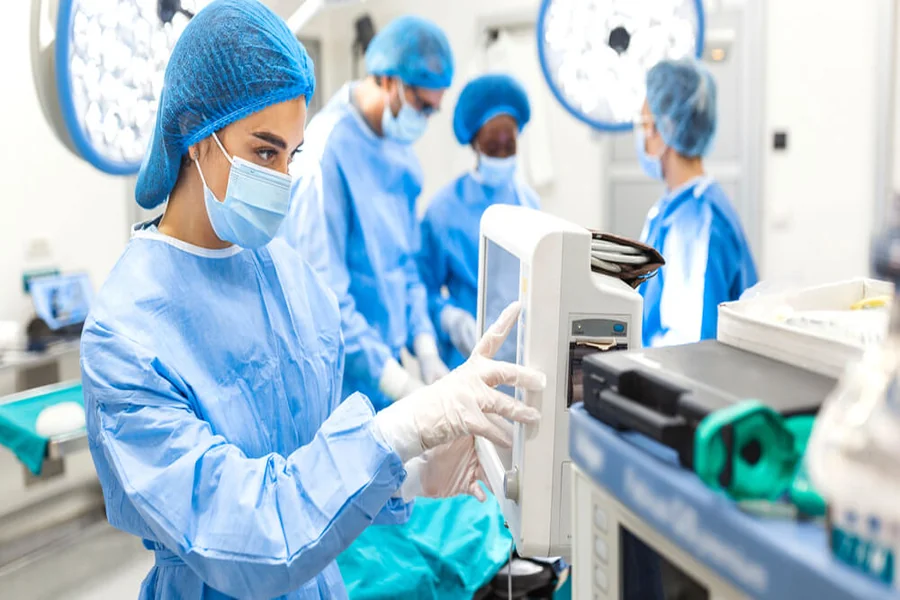
Innovation in Healthcare Technology Enhances Lives Healthcare technology has advanced and is expected to continually transform the nature of medical service delivery and experience. Technology is streamlining the healthcare system, with faster diagnoses and more personalized treatment. Digital tools that aid in monitoring health and controlling conditions are now available in hospitals, clinics, and even homes. Not only are these changes enhancing patient outcomes, but they are also changing the healthcare system as a whole.
Digital Health
The healthcare industry has experienced a significant digital revolution in the recent past. Electronic health records have also substituted the paper-based systems and it has become easier to share and access patient information amongst healthcare providers.
Telemedicine is one of the services that have gained popularity and patients can now talk to doctors remotely. This is particularly useful to individuals in rural or underserved regions who may not necessarily find it easy to access healthcare facilities.
Digital platforms similarly enhance communication between providers and patients, and it has become easier to schedule appointments, update information and manage treatments. Explore in-depth topics at pressvibepulse com.
Artificial Intelligence and Data Role
AI is becoming a significant part of health care. AI systems have the ability to process huge volumes of data to find patterns and help in disease diagnosis.
Machine learning algorithms aid to forecast health risks and prescribe treatment depending on the patient information. This results in better and personal care.
Hospital management, resource optimization, and decision improvement are also being enhanced with the use of data analytics. With these technologies, healthcare systems are becoming more efficient and responsive.
Medical Devices and Equipment
Medical devices have also gotten advanced and have enhanced both diagnosis and treatment. Fit bracelets and smartwatches are wearable devices that enable people to track their health.
The sophisticated imaging technologies also give a closer look inside the human body, enabling physicians to diagnose the conditions at the initial stage.
Another important innovation is robotic surgery, which provides a less invasive and more precise surgery. Such innovations cut down recovery time and enhance patient outcomes.
Portable medical equipment is also simplifying the provision of care in other environments such as homes.
Enhancing Accessibility and Patient Experience
The general experience of the patient is being improved through the use of technology, as it makes healthcare more convenient and accessible. Patients are able to access medical information, make appointments and interact with health care providers online بسهولة.
Remote monitoring systems can help doctors to monitor the conditions of patients without having to visit the hospital regularly. This is especially beneficial in handling chronic illnesses.
There has also been improvement in the accessibility since technology is able to close the divide between the patient and health care services. Individuals that have been hindered to access care in the past can now access effective care in time.
Difficulties in Healthcare Technology Adoption
Although healthcare technology adoption is beneficial, it is also associated with challenges. Data privacy and security is one of the priority issues. It is important to protect sensitive information about patients to ensure trust is maintained.
The cost of adopting new technologies might also be a hindrance (particularly among smaller healthcare providers) particularly due to the high cost of adoption.
Another obstacle is training and adaptation since healthcare professionals must learn how to make the most of new systems.
Another concern is equal access to technology since not every population has equal access to digital access and literacy.
Technological Trends in Healthcare in the future
Healthcare technology is set to become even more innovative in the future. Individual medicine, founded on genetic knowledge, is bound to become prevalent.
New treatment techniques and better disease prevention can be achieved through advancement in biotechnology and nanotechnology.
The artificial intelligence will further improve giving more precise diagnostics and treatment prescriptions.
Plugging in of various technologies will generate more interconnected healthcare systems, enhancing coordination and efficiency. These tendencies point to the possibility of a more active and patient-focused healthcare in the future.
Final Thought
This new technology in healthcare is changing how medical care is provided and it presents new opportunities in making lives better. Despite the still existing difficulties, the advantages of innovation are evident in the improved diagnosis, treatment, and patient care. The healthcare industry can develop an efficient, more accessible, and effective system that will benefit all people by investing in technology further and working on its shortcomings.
FAQs
What are advances in healthcare technology?
They are innovations that improve medical services, including diagnosis, treatment, and patient care.
How does technology improve healthcare?
It enhances accuracy, efficiency, and accessibility, leading to better patient outcomes.
What is the role of AI in healthcare?
AI helps analyze data, diagnose diseases, and recommend personalized treatments.
What are wearable medical devices?
They are devices that monitor health metrics such as heart rate and activity levels in real time.
What challenges does healthcare technology face?
Challenges include data security, high costs, and the need for training and adaptation.
What is the future of healthcare technology?
The future includes personalized medicine, advanced AI systems, and more connected healthcare services.

My name is Hamza Sarwar. I Am a professional content writer.